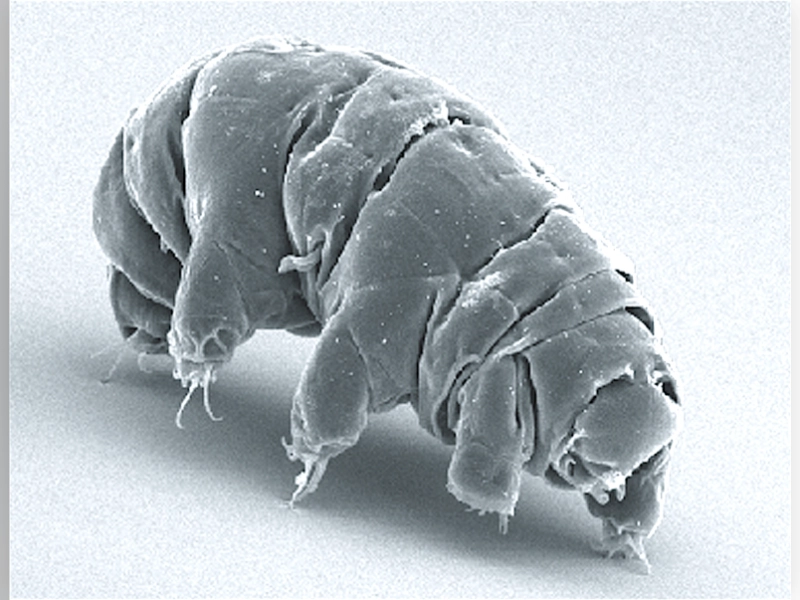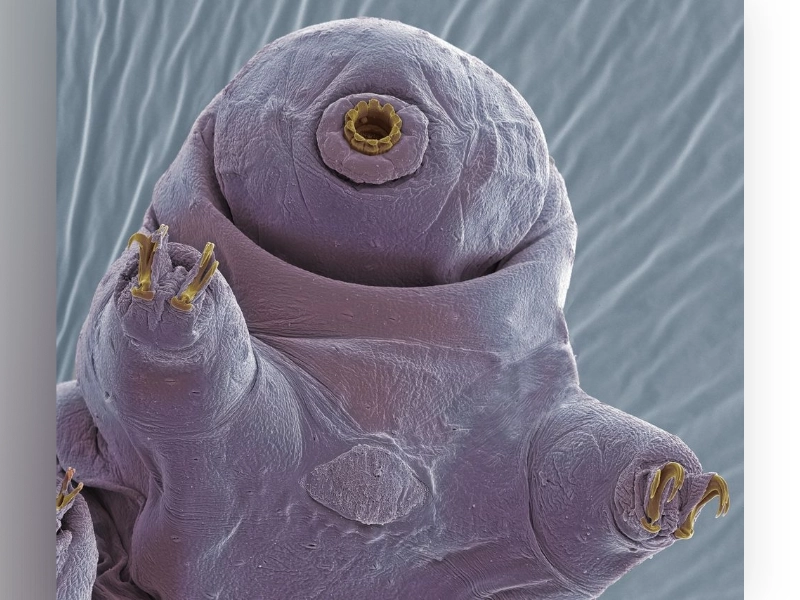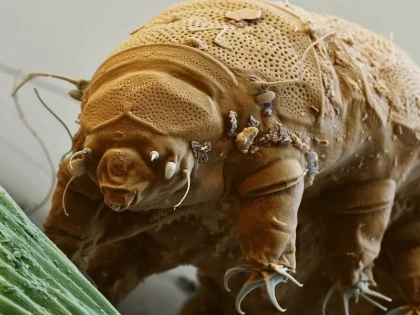
7. Most often, tardigrades feed on bacteria, plants, and even other tardigrades. They penetrate individual cells of their prey, sucking out its contents to obtain nutrients. Inside their weird-looking mouth, they have sharp dagger-like teeth that they use to pierce other living organisms and algae.
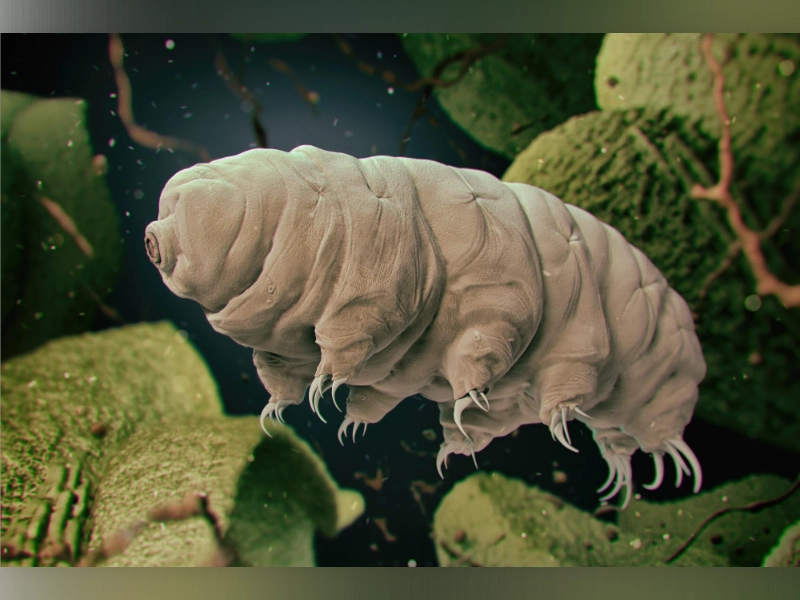
8. When tardigrades have enough food and water to support basic functions, they go through a natural life cycle that rarely lasts more than 2.5 years. However, these water bears can live much longer if they enter a state of cryptobiosis when environmental conditions become unbearable. Contrary to popular belief, tardigrades do not live forever. Stress from freezing, radiation, and the high temperature still affect their physiology.